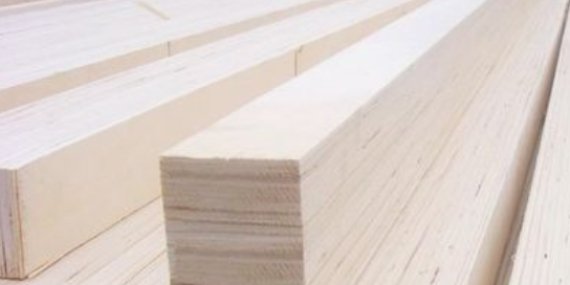
Laminated Veneer Lumber is made from rotary-cut wood veneers through drying, gluing, parallel assembly and hot pressing. Parallel lamination enables directional enhancement of structural performance, featuring high strength and good reliability. It can disperse log defects, with insect-resistant, corrosion-resistant and seismic properties. Eco-friendly and easy to process, it is widely used in construction, transportation and industrial manufacturing.
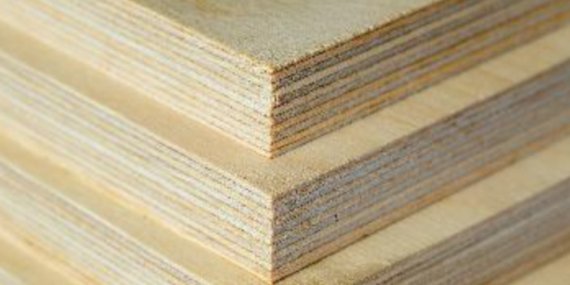
Plywood is made from rotary-cut wood veneers, assembled with fibers of adjacent layers perpendicular to each other and then hot-pressed. It usually has 3–13 layers, mostly odd-numbered. This structure offsets wood anisotropy perfectly, ensuring high stability and strength. With good moisture resistance, easy processability and controllable eco-friendliness, it is widely used in construction, furniture manufacturing, transportation interior trim and packaging.
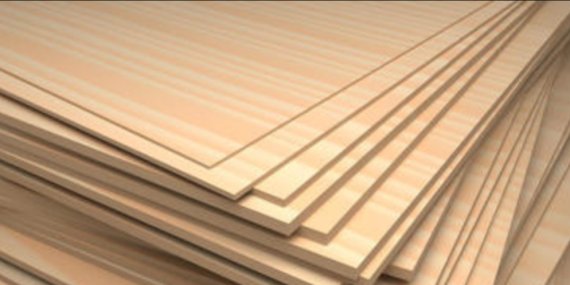
Its performance advantages lie in high strength, durability, versatility and cost-effectiveness, making it suitable for industrialized production and rapid installation.
With applications covering the construction, transportation, industrial manufacturing and home furnishing sectors, it serves as a fundamental element in building modern physical spaces.
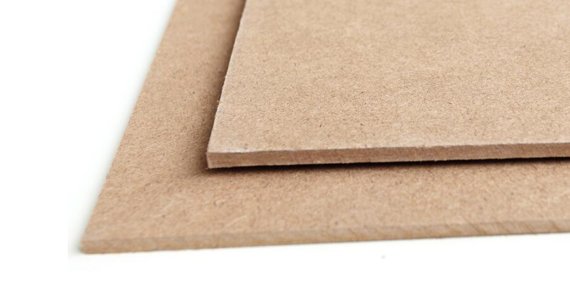
Fiberboard is made from wood or plant fibers through pulping, forming and hot pressing. It features a dense, uniform internal structure free of natural log defects, along with stable dimensions and customizable thickness. With excellent processability, it can be tailored with flame-retardant, anti-corrosion and other functions, and is highly eco-friendly. It is widely used in furniture manufacturing, interior decoration, packaging and industrial interior trim.
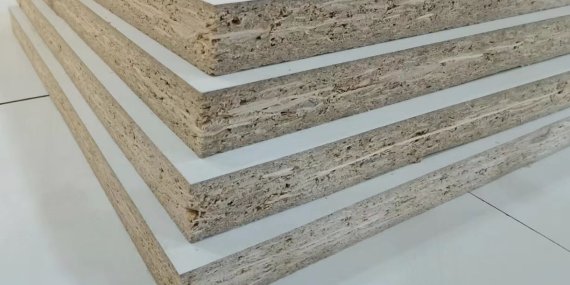
Particleboard is made from wood processing residues, which are crushed into wood shavings, then dried, glued, paved and hot-pressed. It features high raw material utilization, low cost, uniform and stable structure, and flexible specifications. With excellent processability, it can be modified to achieve flame-retardant and moisture-proof functions, boasting outstanding cost-effectiveness. It is widely used in panel furniture cabinets, interior decoration substrates and packaging.
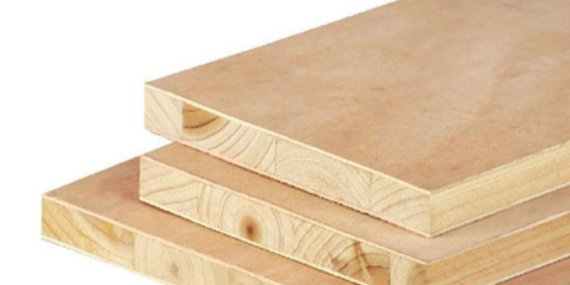
Blockboard takes solid wood strips as the core material, with veneers attached to both sides and formed by hot pressing. It retains the toughness and load-bearing capacity of solid wood, featuring a stable structure resistant to deformation, strong nail-holding ability and easy processability. Its moisture and corrosion resistance can be enhanced via veneering and painting. With a balanced cost-performance ratio, it is widely used in interior decoration substrates, furniture frames and light packaging.